Maybe you have been reading a forum for weeks without posting. Or you are thinking about a small group chat for people with the same condition. Either way, the first post is the hardest part. You want to say something true, but you are not sure how much to reveal, who will read it, or what happens next. A good patient community can make a hard week feel less lonely. A poorly run one can add stress, expose private details, or turn support into advice-giving pressure. The difference is rarely luck. It comes from a few deliberate choices about privacy, boundaries, and moderation.
Privacy is not one setting. It is a series of small decisions, and some of them happen before you type a single word. Start with your display name and photo. A pseudonym is normal in patient communities, and it gives you room to speak honestly without attaching your health story to your full name at work, at school, or in a future search. If you use a photo, choose one that does not show your face, your home, a school uniform, or a recognizable workplace.
Then look at the space itself. Is it public, private, or invite-only? Can posts be found by search engines? Can members screenshot or forward messages? Those answers change what is reasonable to share. A closed group of twenty people is not the same as a public forum read by thousands. Neither is automatically better, but you should know which one you are in.
Specific details carry more risk than they seem to. A clinic name plus an appointment date plus a rare diagnosis can identify you quickly. So can a photo of a hospital wristband, a prescription label, or a child in the background. Try sharing the experience without the identifying detail:
Ask before you share someone else’s story, too. A partner’s diagnosis, a parent’s decline, a child’s symptoms: those details belong to them as well. If you need to talk about a situation involving another person, change names and remove identifying details unless you have clear permission. A simple test helps: would you be comfortable if a coworker, a future employer, or your teenager read this in a year? If not, trim it down.
Patient communities work best when people feel free to speak without being managed. That means asking before giving advice. “Can I offer something that helped me?” is very different from “You need to try this.” One invites a conversation. The other puts someone on the spot and can make them feel judged for not having tried enough.
Encourage people to speak from their own experience. “This is what worked for me” is useful. “This will cure you” is not, and it can be harmful. If a question touches diagnosis, medication, benefits, or legal rights, point people toward a qualified professional rather than relying on the group’s collective guesswork. Peer support is valuable, but it is not a substitute for clinical or legal advice.
Content warnings help, especially in groups where people discuss surgery, loss, fertility, or difficult appointments. A short line at the top of a post — “mention of pregnancy loss” or “details of a rough hospital stay” — lets readers choose when to engage. So does keeping graphic detail to a minimum unless the group has agreed otherwise.
Time boundaries matter as much as topic boundaries. No one owes an immediate reply. Moderators need days off. Members can say, “I don’t have the capacity to hold this today, but I’m glad you posted.” That is not rejection. It is honesty, and it keeps people from burning out.
Before replying, ask yourself: does this person want information, company, or simply a place to vent? Then respond to that, not to the reply you feel like writing.
When you join a group that already exists, spend a little time reading before you post. Look at the pinned rules, the tone of recent threads, and how members respond to disagreement. Every community has a culture. Some are brisk and practical; others are gentle and slow. Neither is wrong, but you will settle in faster if you notice the rhythm.
A new community needs a clear reason to exist. “Support for people with this condition” is a start, but it is too broad to guide decisions. Ask yourself who it is for, what kind of sharing you want, and what you will not host. A group for newly diagnosed adults may need different rules from a group for caregivers. A local group may need different privacy settings from a global one.
Choose a platform whose privacy settings you understand, and write the rules before you invite anyone. Keep the first group small enough that you can welcome each person properly. Ten engaged members can be more supportive than two hundred strangers. Decide who moderates with you, how decisions get made, and what happens when someone breaks a rule.
Have a simple plan for urgent posts. If someone describes a crisis, direct them to local emergency services and encourage them to contact a trusted person nearby. Do not promise confidentiality you cannot keep, and do not make the group the only safety net. A short, calm response is better than a long one that delays real help.
Moderation is not censorship. It is hospitality. A well-moderated group feels predictable: people know what is allowed, reports are taken seriously, and mistakes are handled without humiliation. Start with visible reporting tools and a named contact. When someone reports a post, acknowledge it. You do not need to explain every decision, but you do need to show that the report was seen.
Separate disagreement from harm. Two members can disagree about a treatment experience without either being unsafe. Personal attacks, doxxing, scams, and repeated boundary-pushing are different. Remove the content, speak to the person privately, and document what happened. If you run a team, rotate the difficult shifts and check in with each other. Moderator burnout is real, and it usually shows up as silence.
Keep a short list of common situations and your standard response: a new member asking for a diagnosis, a post with identifying details, a conflict in a thread, a member who sends too many private messages. Having a response ready makes the work less emotional in the moment. It also keeps decisions consistent.
You can be a valued member and still log off. Notice when reading becomes scrolling, and when scrolling becomes a heaviness you carry into the evening. Mute a thread. Take a week away. Block a person without announcing it. Tell a moderator if a conversation has left you feeling unsafe, and keep at least one source of support outside the group — a friend, a family member, a counselor, or a clinician you trust. Peer communities are one part of care, not the whole of it.
Pick one space, not five. Read its rules and privacy settings. Choose a display name that does not identify you. Write a short introduction and save it for an hour before posting. Decide in advance which details you will not share: your workplace, your children’s names, your exact address, your appointment dates. Then make one honest post, reply to one person, and close the tab. That is enough for a first week. Community is built in small, repeatable acts of care, and you are allowed to start slowly.
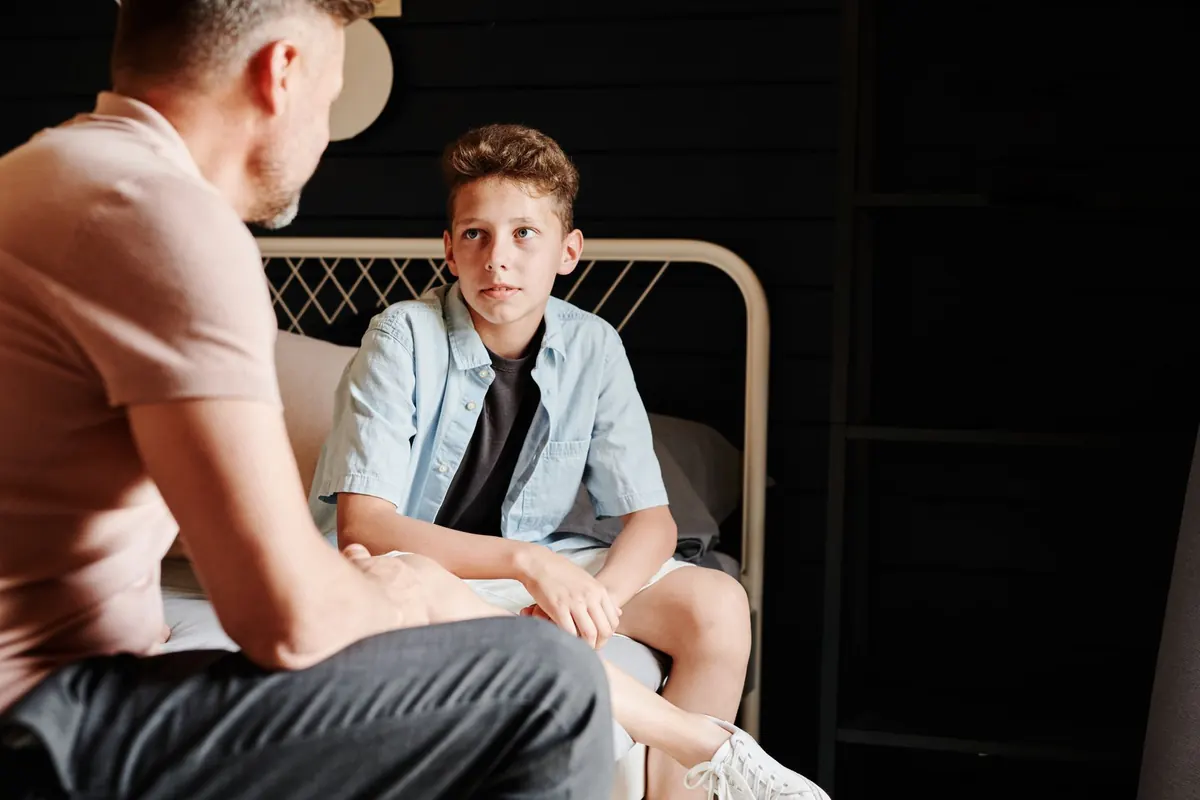
Photo: Artem Podrez / Pexels